
The Moluccas
Halmahera, Ternate and Tidore, Seram, Ambon and Banda.
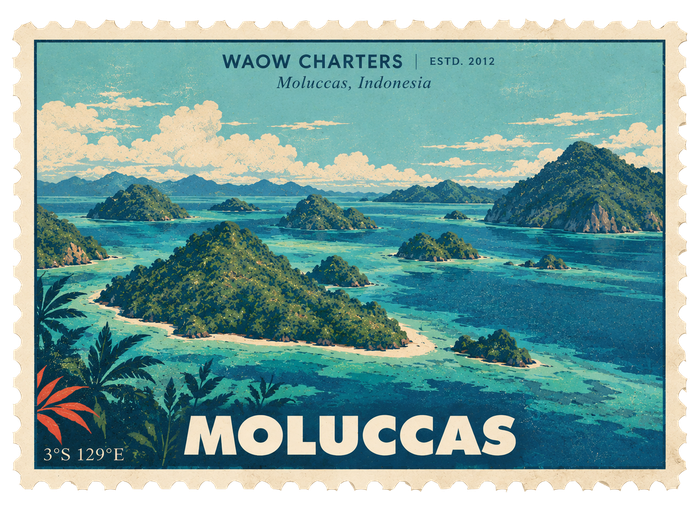
Between Sulawesi and New Guinea, spread across two seas, lies a scatter of islands that most people would struggle to place on a map and that once set the price of dinner in Europe.
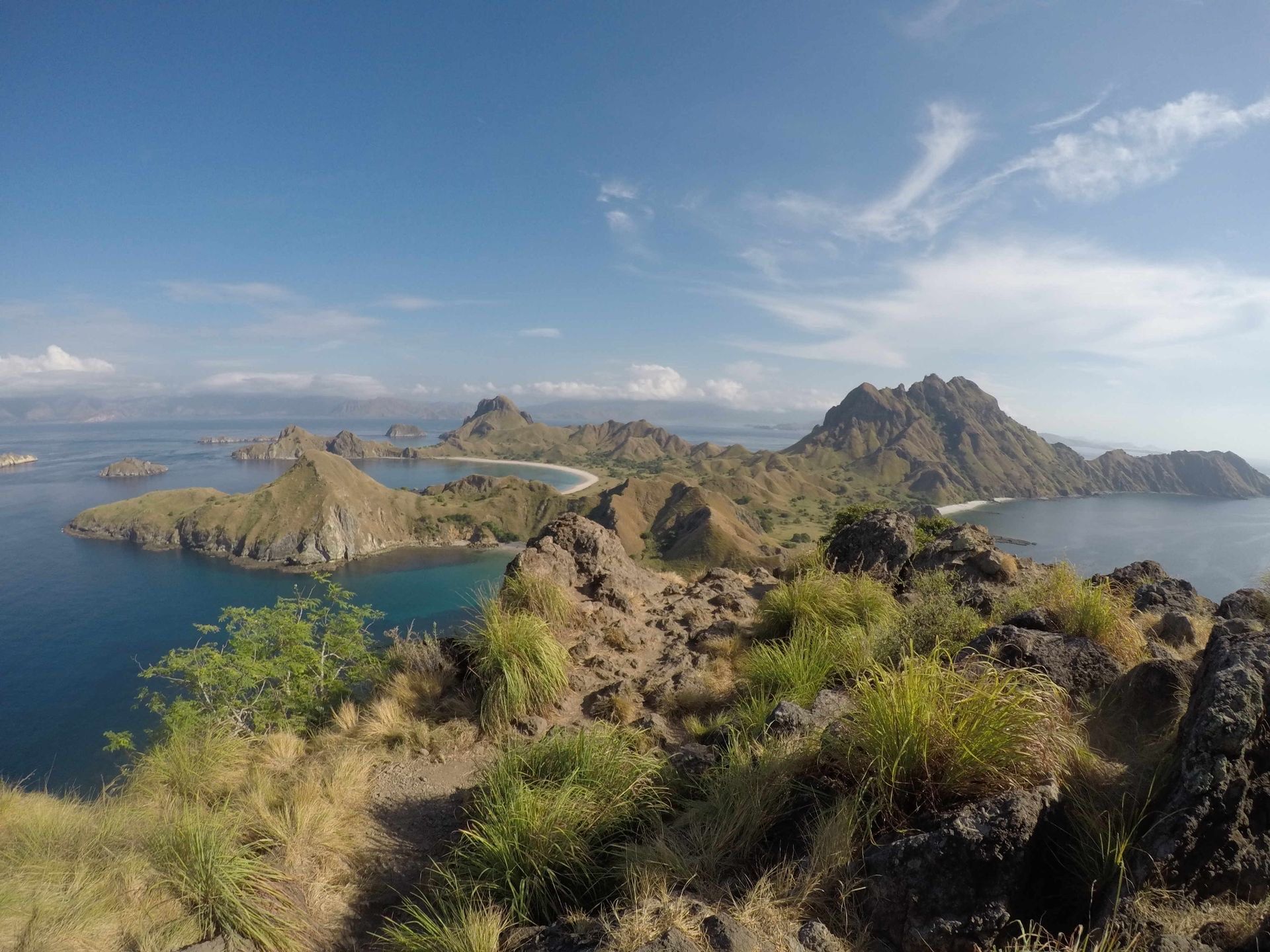
Halmahera with its four long arms, the volcanic cones of Ternate and Tidore, mountainous Seram, Ambon in its deep bay, and Banda far to the south. Small islands, deep water between them, and very few boats.
Diving:
Untouched reef with no boat traffic, exceptional macro and mandarinfish, reef sharks, seasonal hammerheads and threshers, and genuine exploratory diving.
Topside:
The forts and sultanates of Ternate and Tidore, Banda Neira, nutmeg and clove groves, volcanoes and rainforest, Wallace's standardwing.
What makes it different:
The islands that drew Europe across the world, and the place where the theory of natural selection was written down.
Seasons we are there:
March and November.
Key Info
SUBREGIONS
Halmahera.
Halmahera, with the Patinti Strait, Bacan and the Guraici islands. Ternate and Tidore. Seram, north and west. Ambon. The Banda archipelago.
book your stay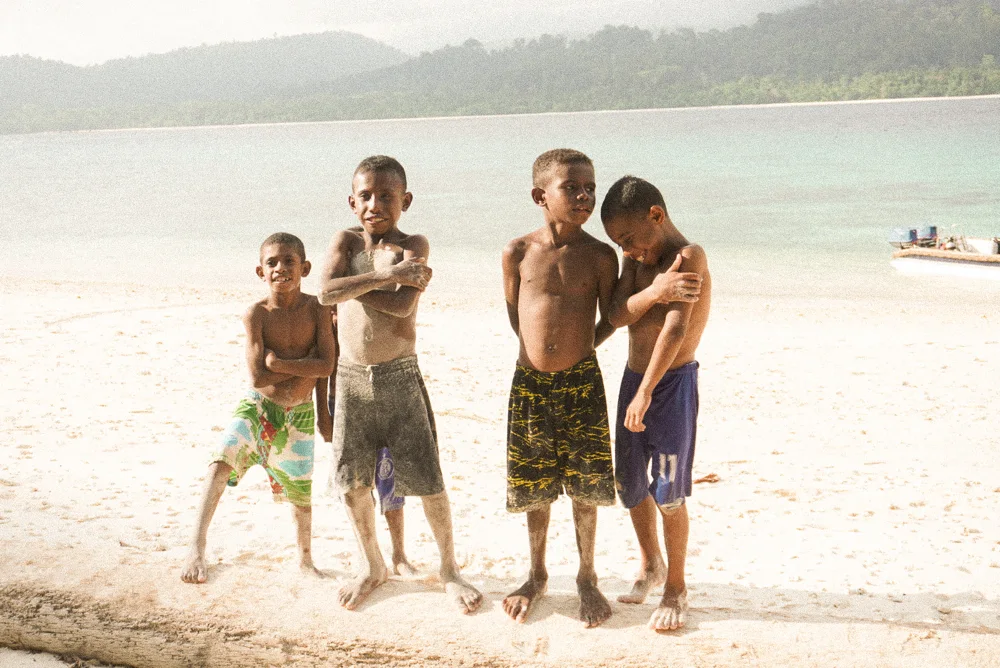
Explore the Moluccas
Routes through the Moluccas.
Where Natural Selection
Was Written Down
In February 1858 Alfred Russel Wallace was lying in a fever in a house on Ternate when the mechanism of natural selection came to him. He wrote it out, posted it to Charles Darwin, and the course of biology changed from a hut in the Moluccas. It is no coincidence that it happened here. These islands sit isolated from one another across deep water, and the result is exactly what Wallace was looking at: species confined to a single island, whole groups found here and nowhere else. Halmahera has its own walking shark. Ambon Bay has a frogfish, described in 2009 and patterned like spilled paint, found almost nowhere else. Wallace's standardwing, a bird of paradise with two absurd white pennants on each wing, displays in the Halmahera forest and carries the name of the man who discovered it.
Big fish on the
corners, strange
ones in the bays.
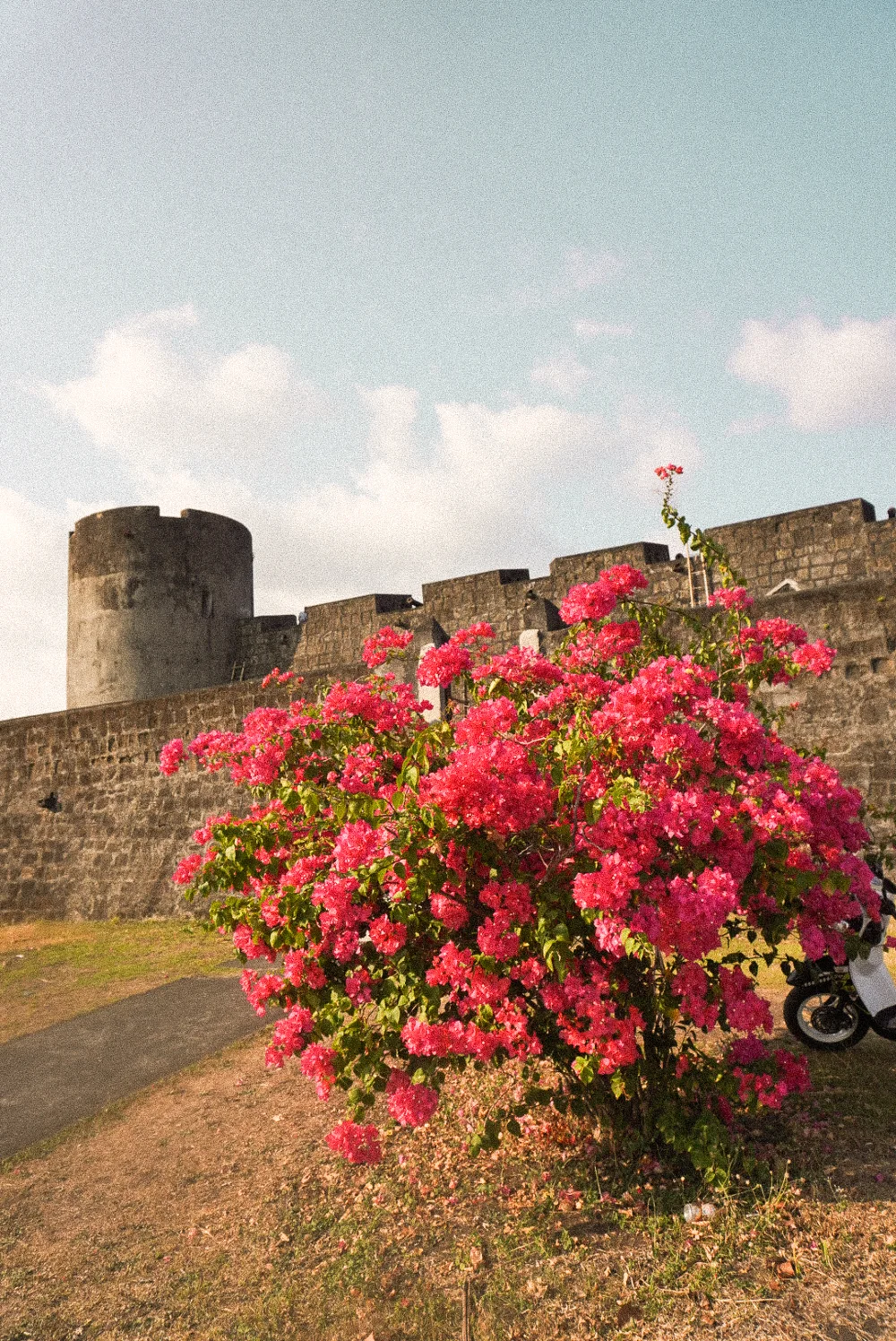
For a few centuries these islands mattered more than almost anywhere else on the planet, and then they were forgotten. Cloves grew on Ternate, Tidore and their neighbors and nowhere else on earth. Nutmeg grew on Banda and nowhere else at all. Both were worth more by weight than silver in Europe, and that single botanical accident pulled the Portuguese, the Spanish, the Dutch and the English across the world to fight over a handful of small volcanic islands. The English gave up Run, a nutmeg island two kilometers long, to the Dutch in 1667 in exchange for Manhattan, and at the time it looked like a sensible deal. Today the forts still stand above the harbors, the nutmeg groves are still worked, the sultanates of Ternate and Tidore still exist with their palaces occupied, and hardly anybody comes.
Reefs Almost
Nobody Dives
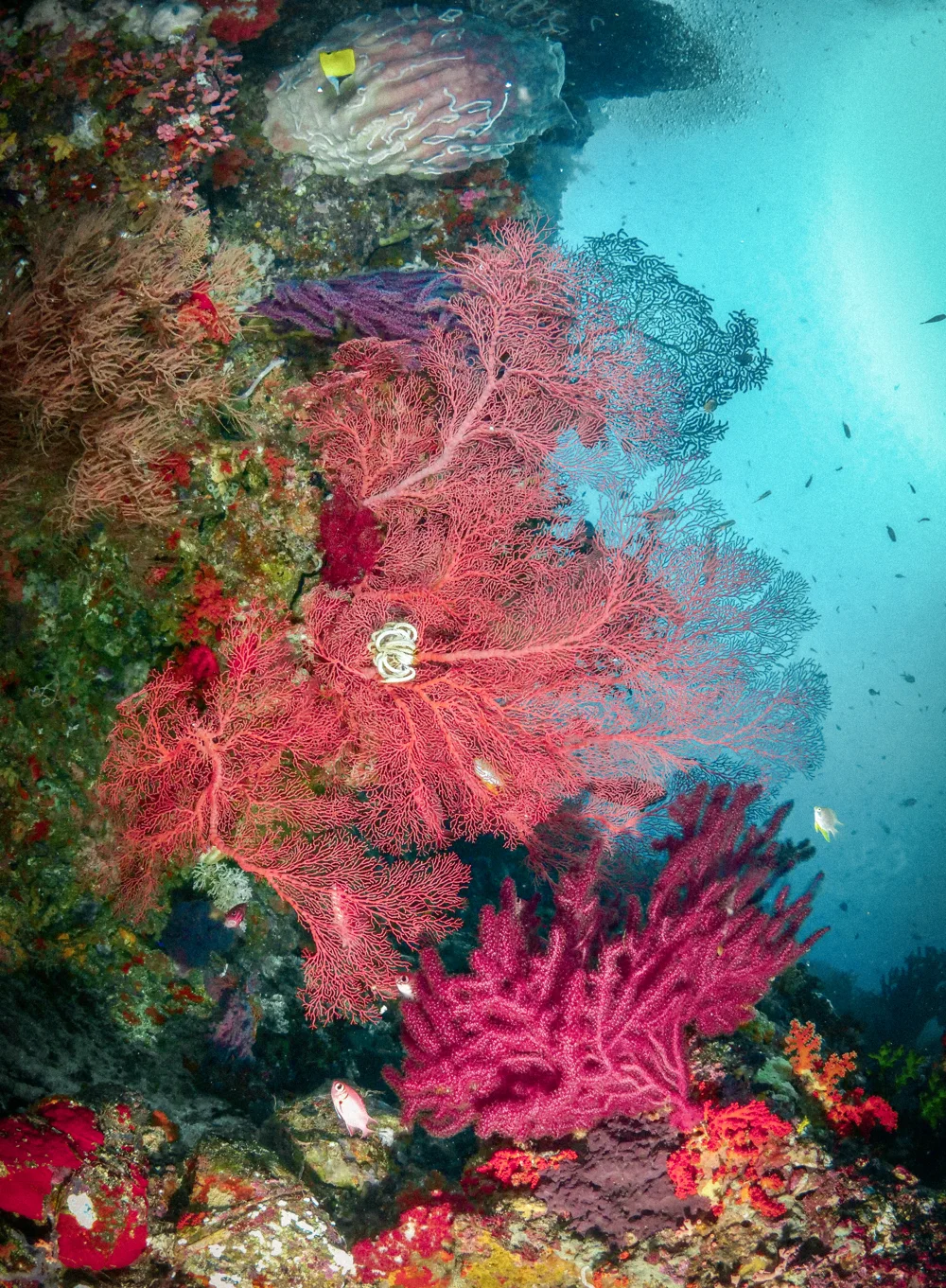
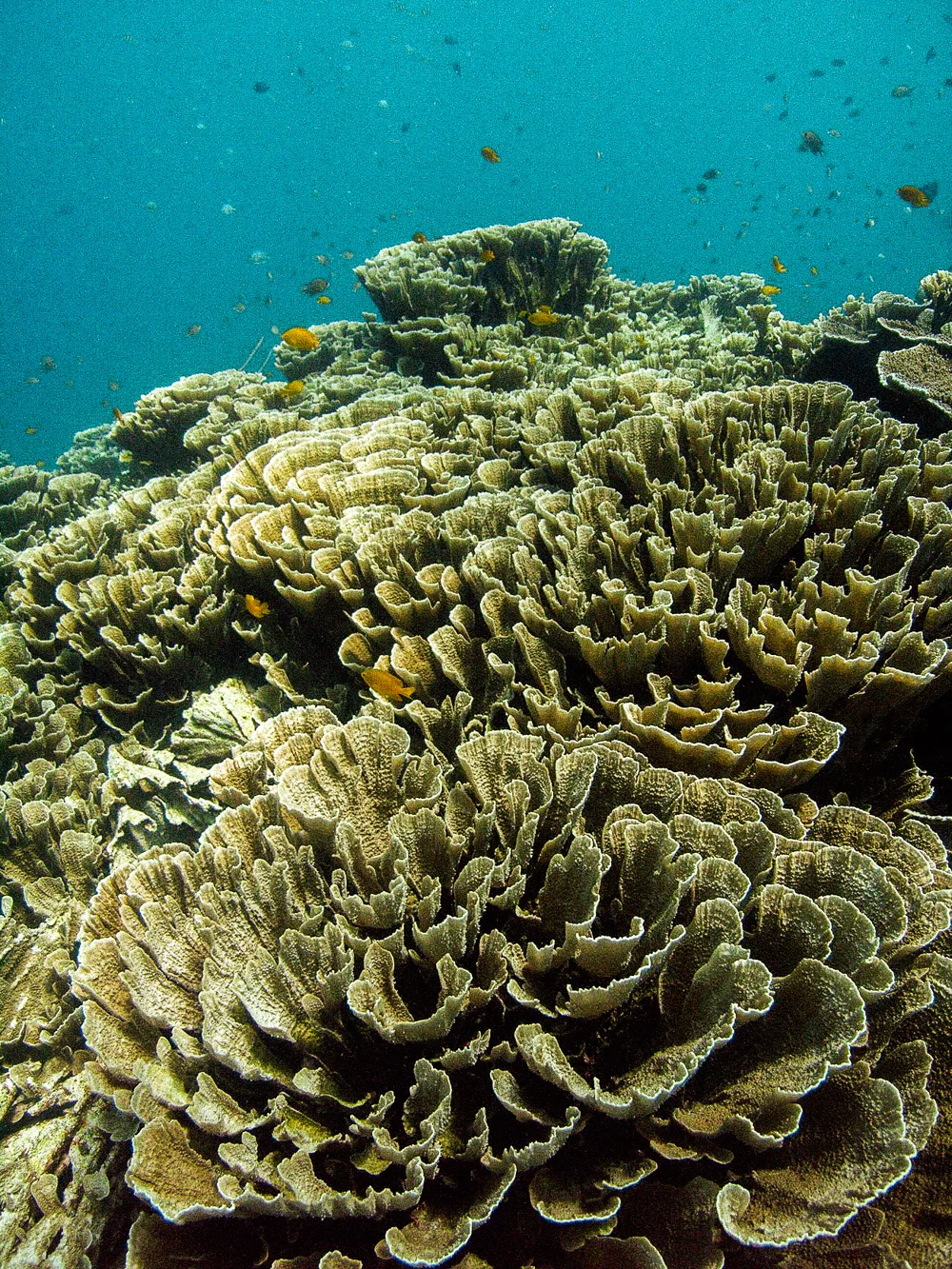
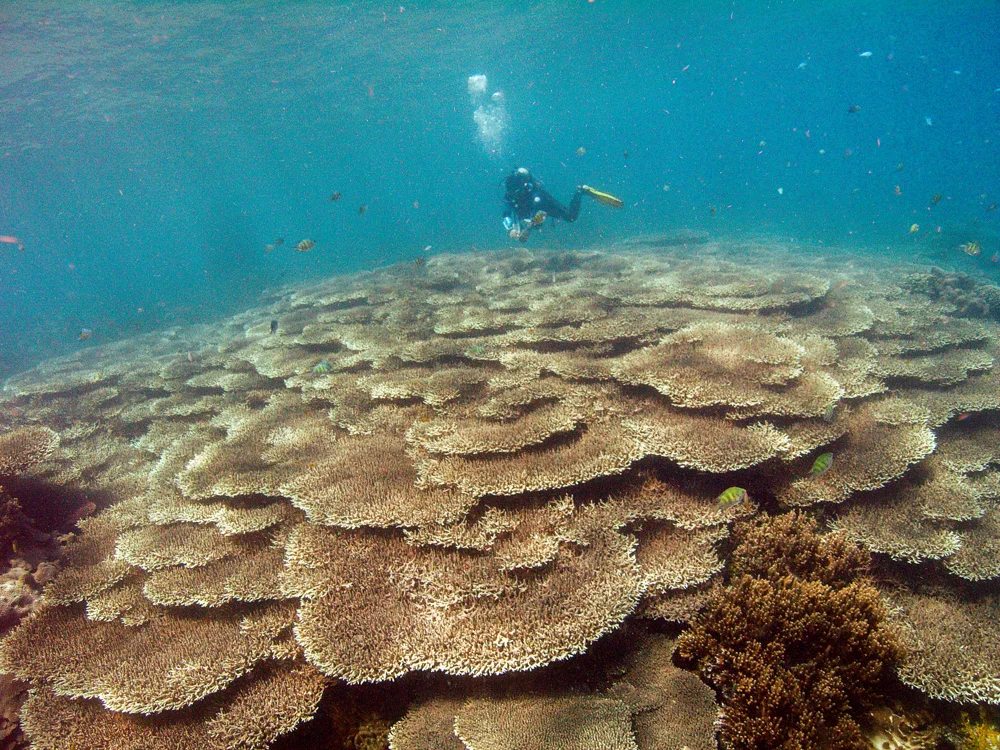
Halmahera alone has more shoreline than Java, and the overwhelming majority of it has never been logged, named or photographed underwater. Seram's northern coast is much the same, and Bacan and the Guraici islands get a handful of visiting boats in a year. Reefs under no pressure behave differently. Hard coral grows in plate stacks and thickets that run all the way into the shallows, table corals reach diameters that take a moment to register, barrel sponges stand taller than a diver, and gorgonians fan out across the drop-offs unbroken. Nothing bolts when you arrive, because nothing here has learned that it should. Every itinerary in this region carries days set aside for looking at coastline we have not dropped on before, and given how much of it there is, that is less of a gamble than it sounds.
book your stay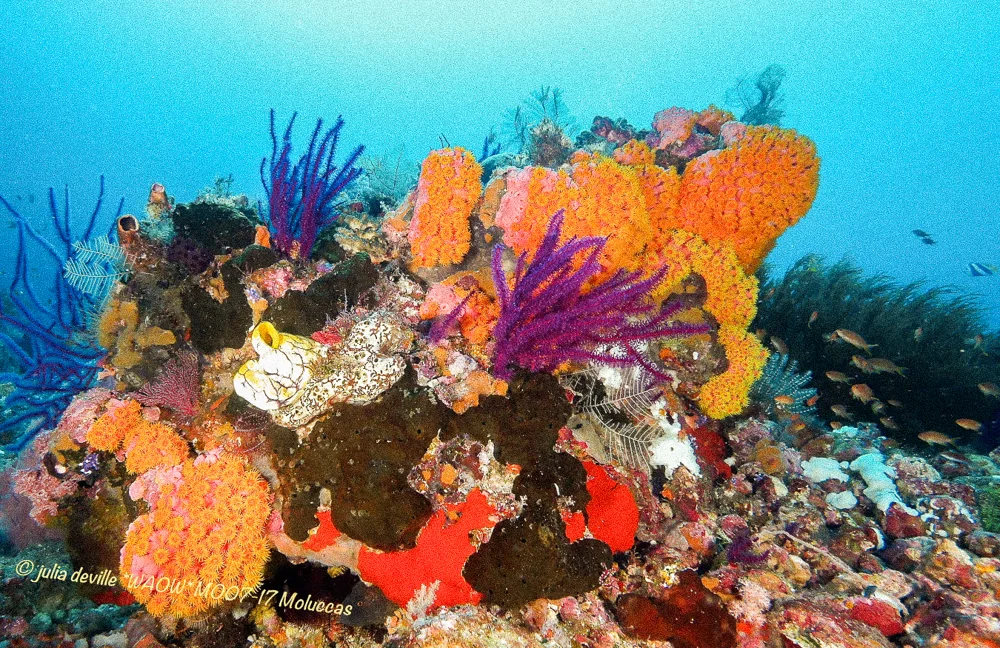
Volcanoes and Palms
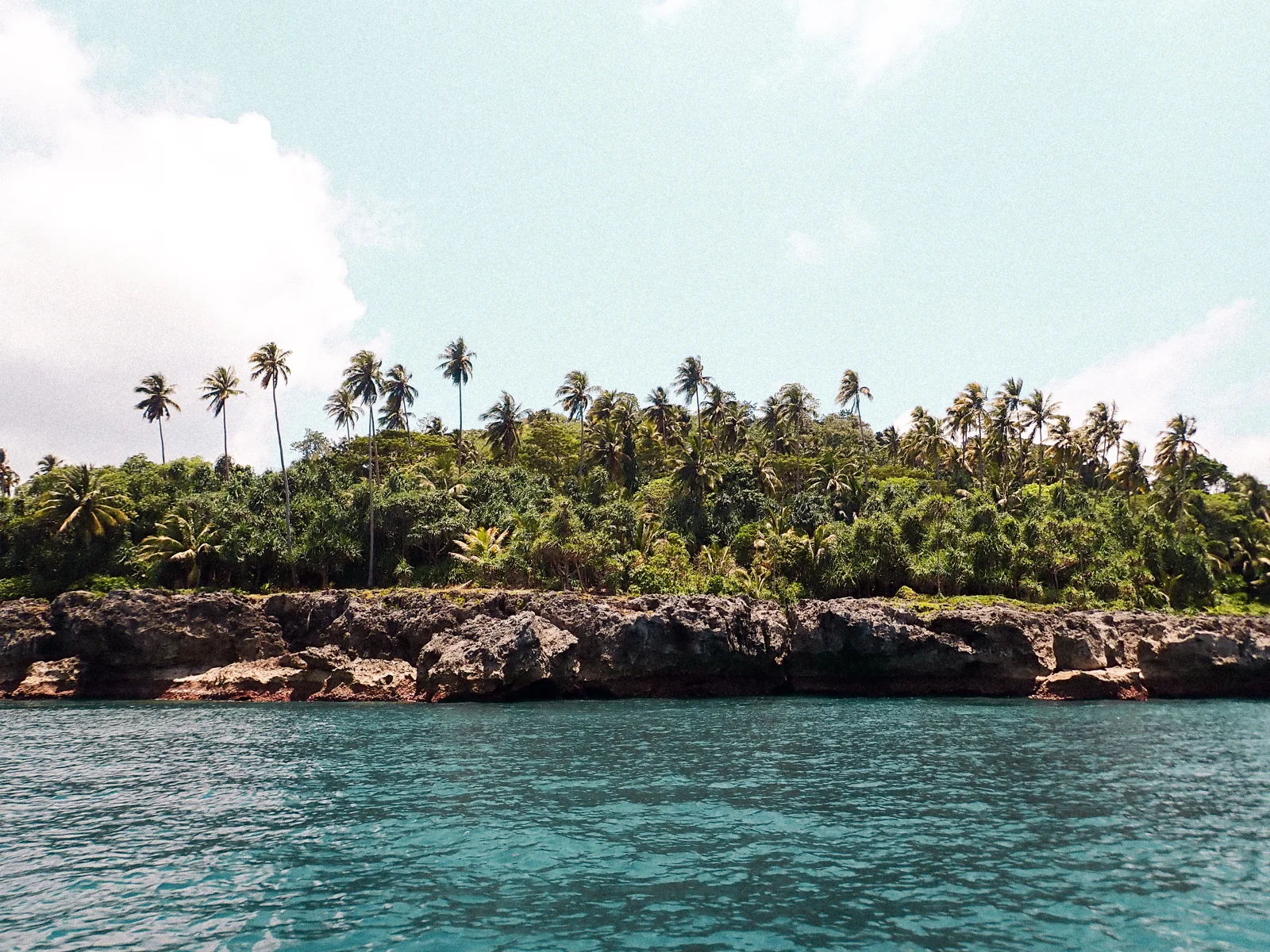
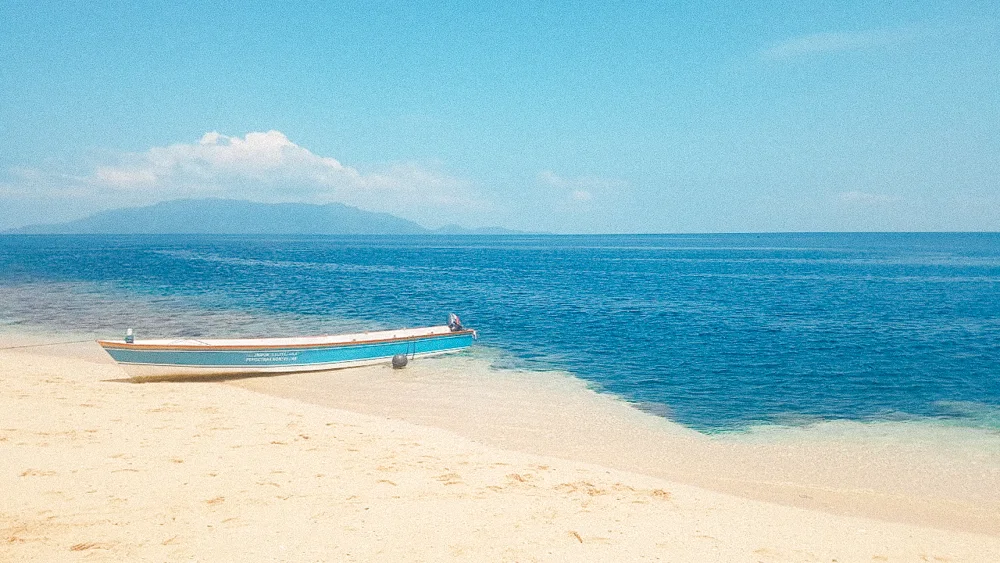
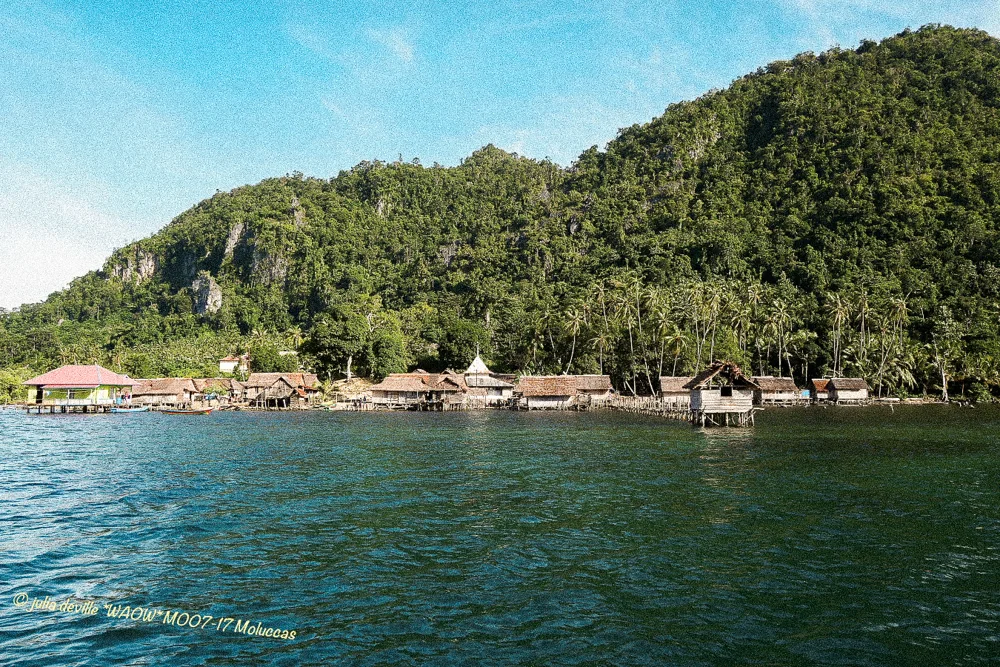
Above water these are the tropical islands of the imagination. Ternate and Tidore are two perfect cones side by side, Ternate's still active, with clove trees growing up their slopes. Banda Neira has its own volcano over the anchorage and a lava flow from the 1988 eruption that has regrown into a fine demonstration of how fast a reef recovers. Elsewhere it is rainforest down to the water, coconut and sago palms, black and white sand beaches, and small settlements where the boat is the day's event. Seram holds serious wilderness inland, with Moluccan cockatoos, purple-naped lories and the imperial pigeons that spread nutmeg seeds around these islands long before anybody thought to trade them.
Many Peoples on
Small Islands
The Moluccas have never been one thing. Ternate and Tidore were rival maritime powers whose reach ran from Sulawesi to the edge of New Guinea, and both played the European arrivals against each other for generations. In the north the languages of Halmahera are not Austronesian at all but related to the Papuan languages of New Guinea, a linguistic border in the middle of the archipelago. Seram has its Alifuru communities inland with their own traditions. Ambon carries four hundred years of layered history, Portuguese and Dutch, Christian and Muslim, in one small city, along with pela gandong, a system of formal alliances between villages that often binds a Christian village to a Muslim one in mutual obligation across generations. Music matters here more than in most of Indonesia, and so does food: sago rather than rice, fish grilled with kenari nut, and spice in everything for the obvious reason.
The Variety
Underwater
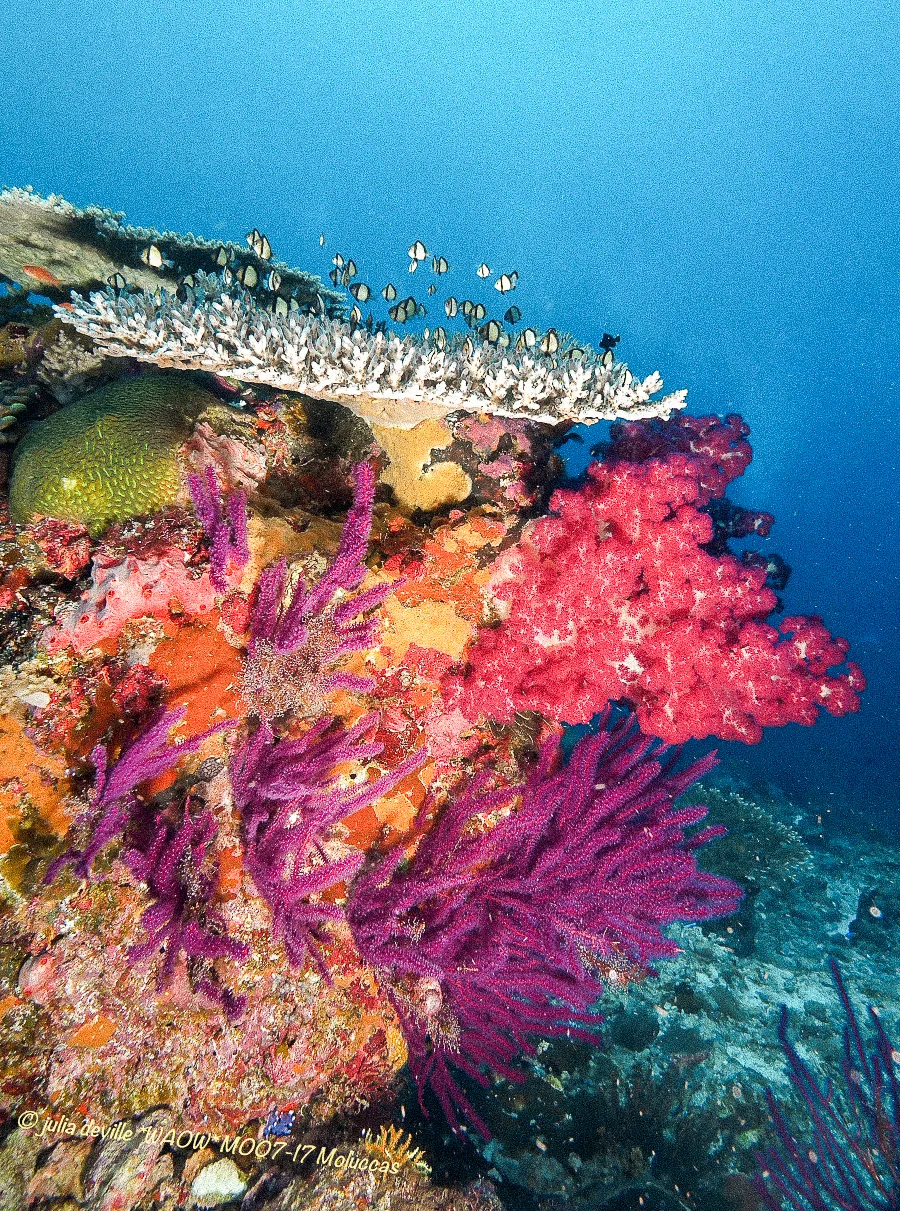
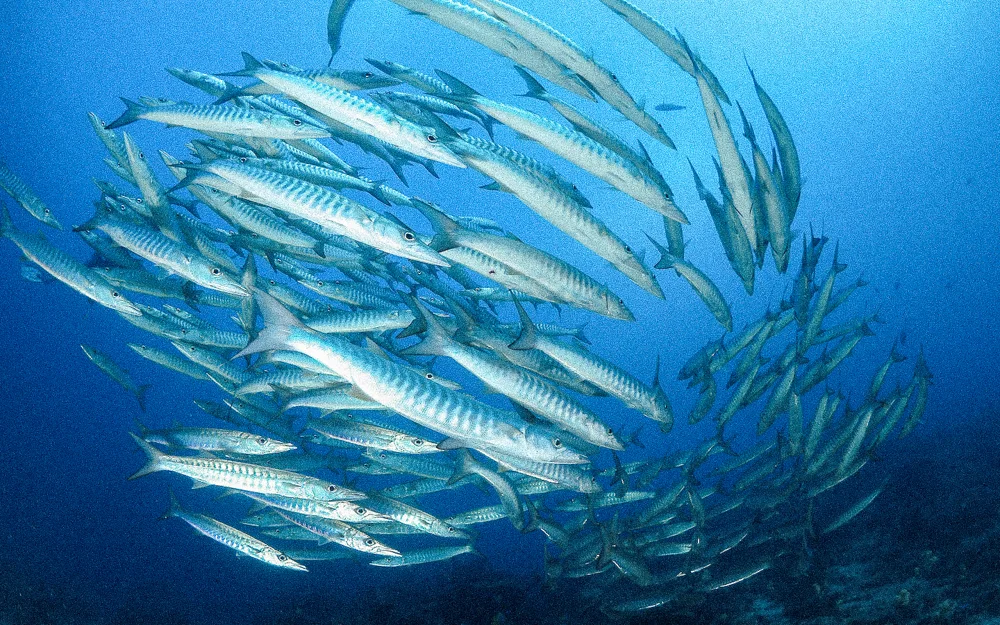
Few regions change shape this often between breakfast and dinner. One morning is a volcanic wall falling away past the limit of visibility, the next is a shallow coral garden in flat water, then a tidal narrow where fusiliers, snapper and surgeonfish bank into the flow together, then a seamount out in the blue. Gray reef, whitetip and blacktip sharks patrol most of these sites in healthy numbers and go about their business unbothered by divers. Barracuda and trevally circle the exposed corners, bumphead parrotfish move along the shallows in squads, and napoleon wrasse and big grouper hold station on the reef edge. Out on the deeper structures, hammerheads gather at certain sites in the right weeks, threshers rise from below along the walls, and the crossings between islands regularly turn up pilot whales, sperm whales and dolphins.
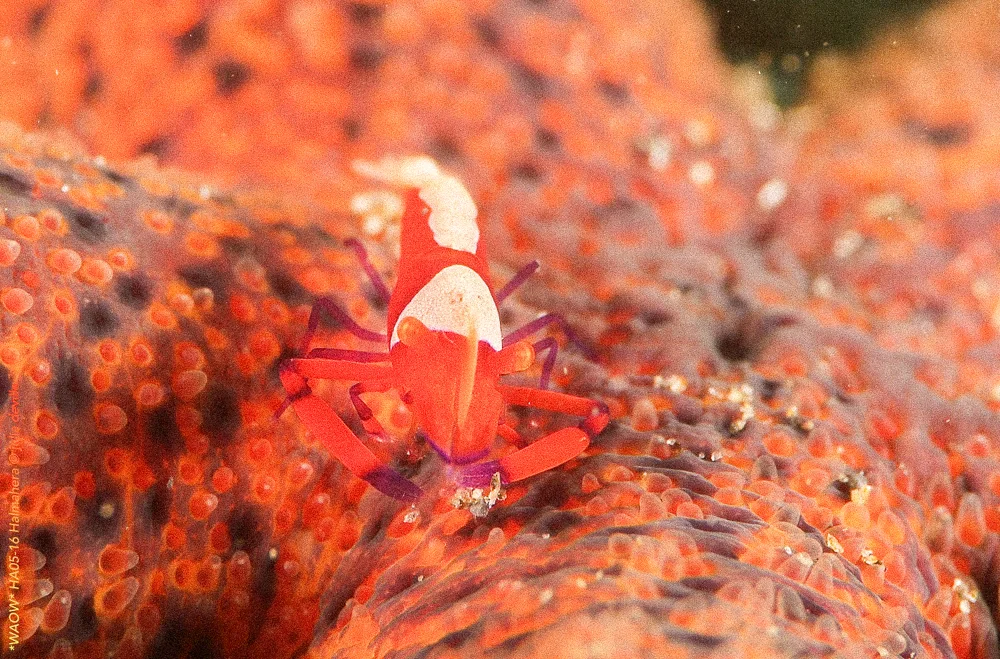
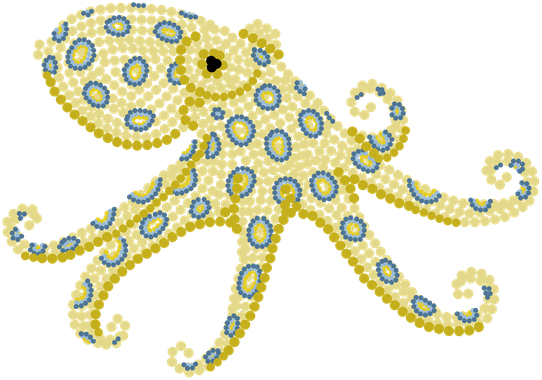
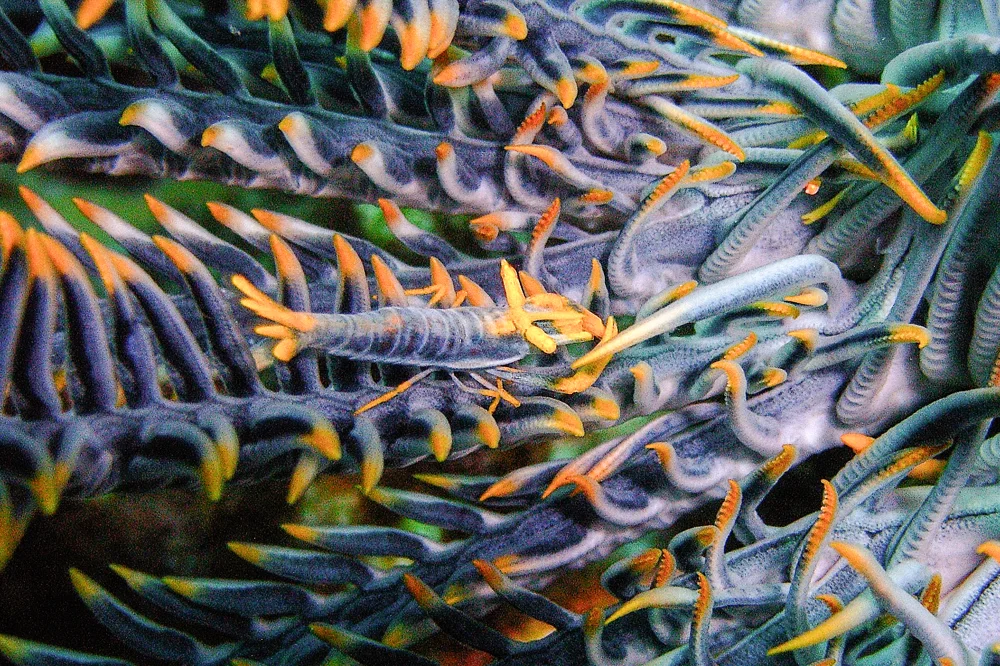
Then the opposite end of the spectrum. The dark sediment bays of Halmahera and the shallows of Ambon are among the finest hunting grounds anywhere for the small and improbable: rhinopias, hairy and clown frogfish, ghost pipefish, bobtail squid, blue-ringed octopus, seahorses, nudibranchs by the hundred, and the psychedelic frogfish, found almost nowhere else. At dusk the mandarinfish emerge across the whole region, and the final dive of the day ends up being the one people describe first when they get home. Ambon also holds a substantial wartime-era wreck, upright and softly overgrown, for anyone who wants scale and structure between the thumbnail-sized subjects.
Explore other regions
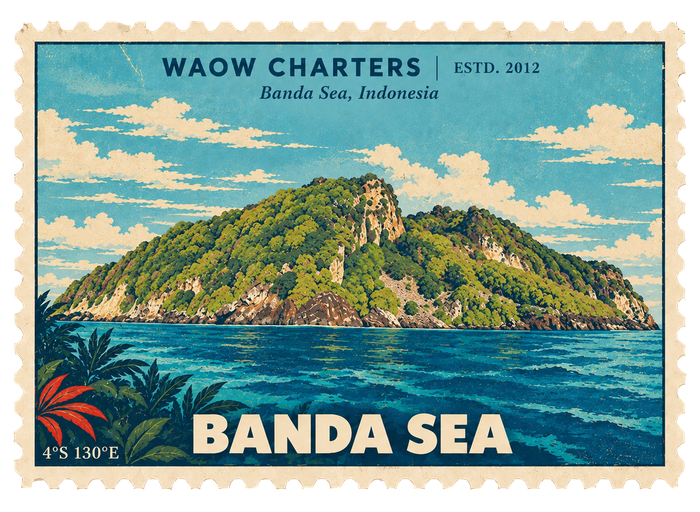
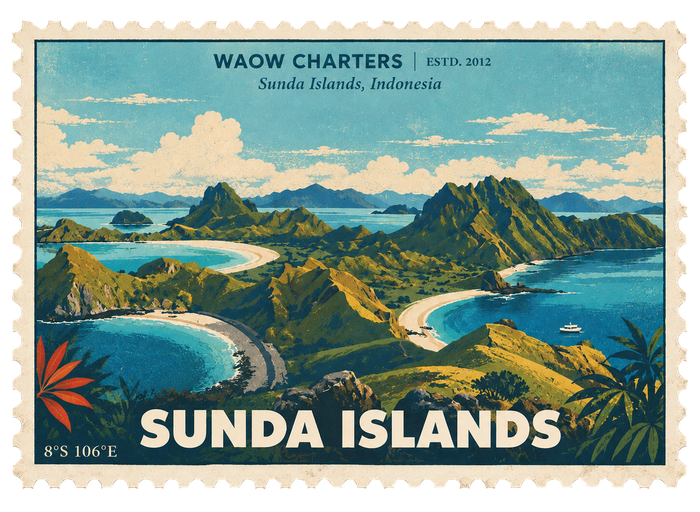
Five ways.
One very big sea.
Ready for your next descent?
More than ten different ways into Indonesia.
And an entire world below the surface.